
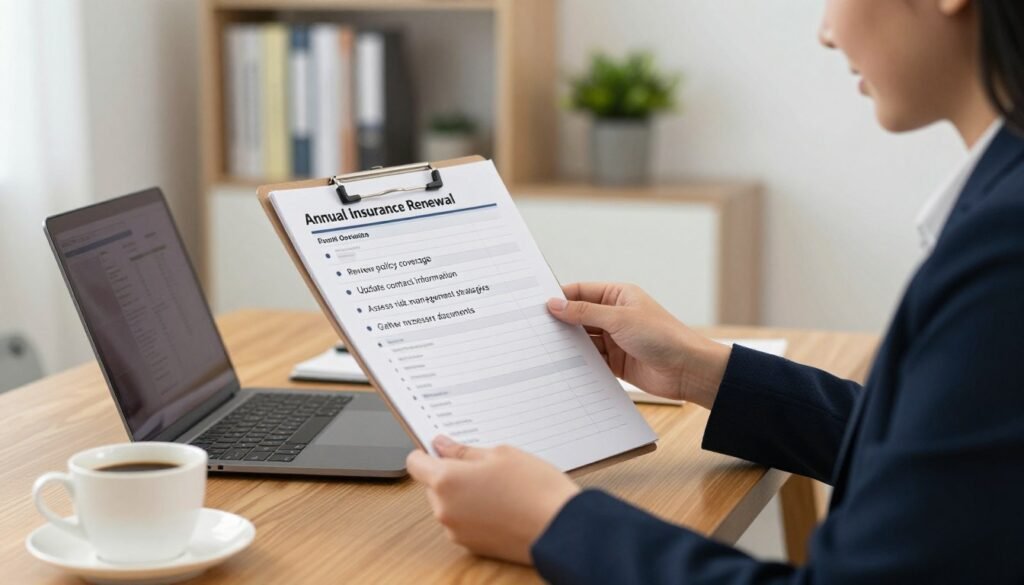
The National Federation of Independent Business reports that insurance payments rank high on annual spending for many companies. Treating your yearly renewal as routine can leave gaps that create costly claims later.
Use a concise small business insurance renewal checklist to align policy limits and coverage with current operations. A focused process helps you spot errors, update endorsements, and confirm property and technology data before a loss occurs.
Jonathan Selby, General Manager at Founder Shield, warns that a casual approach to renewal often misses key exposures like cyber liability and errors omissions. A deliberate review also lets you weigh costs against protection and adjust your risk profile.
This guide outlines clear steps to manage the renewal process, protect customers, and keep your company compliant and financially secure in the United States. Follow it each year to reduce surprises and strengthen long‑term growth.
Why Your Annual Insurance Review Matters
An annual policy review is a practical checkpoint to align your protections with how your company actually operates today. Jonathan Selby at Founder Shield notes that renewal season is a built‑in moment to reevaluate risk and confirm that coverage matches current operations.
Use this process to get your team together, update key facts, and negotiate terms that fit ongoing growth. A focused review helps you spot gaps before they become liability claims that strain cash flow.
Proactive management of policies keeps protection synced with changing needs. Understanding why costs rise or fall lets you budget smarter and show underwriters improvements in safety and operations.
- Reexamine limits and endorsements against current operations.
- Ask carriers about changes that affect premiums and coverage.
- Document safety steps to help control future costs.
Companies that skip this annual task often learn about missing protection only after a large incident. Treat the review as risk management, not paperwork, to support long‑term growth and resilience.
Preparing for Your Small Business Insurance Renewal Checklist
Beginning preparation 60–90 days ahead of a policy end date unlocks time for better quotes and fewer surprises. Use this window to gather facts, align your team, and set clear priorities for coverage changes.
The Early Start Advantage
Starting the process early gives your broker time to benchmark premiums and negotiate terms. It reduces last‑minute errors and creates room to compare multiple carriers.
Organizing Your Financial Data
Collect updated revenue projections, payroll totals, and asset lists. These data points present a clear risk profile to underwriters and often lead to stronger terms.
- Assemble financial reports and headcount details.
- Document new services or expanded customer support that affect liability and coverage needs.
- Review past claims and note operational changes that impact the renewal process.
Treat the process as strategic management, not a formality. Early, organized preparation helps your company secure competitive quotes and avoid coverage gaps that hurt growth.
Assessing Your Current Coverage Limits
Start by measuring whether your current policy limits match the most likely severe loss your company could face. Compare expiring coverage to an estimated Maximum Probable Loss so you spot gaps before a claim occurs.
Many U.S. firms carry $1 million per occurrence and $2 million aggregate for general liability. Confirm those limits meet contract requirements from vendors or landlords and cover potential customer claims.
Check commercial property values against current construction and replacement cost data, not book value. Update inventory and asset lists so property limits reflect true replacement cost as assets grow.
- Review AM Best ratings to verify carrier financial strength (A‑ or higher is preferable).
- Consider an umbrella policy if you have high public exposure or operations with greater liability risk.
- Work with your team to adjust endorsements and limits to match actual exposures.
| Coverage | Typical Limit | When to Increase |
|---|---|---|
| General liability | $1M / $2M | High customer contact or contract mandates |
| Commercial property | Replacement cost | Significant asset growth or new equipment |
| Umbrella | Varies | Exposure above primary limits |
Use this part of your insurance renewal checklist to avoid being underinsured. A clear limits review protects customers, assets, and long‑term value.
Evaluating Changes in Business Operations
Operational shifts this year can change your exposures and should trigger a focused policy review. Take time to list hires, new sites, added equipment, and any service updates so your broker can match coverage to reality.
Staffing and Payroll Shifts
Hiring employees affects mandatory workers compensation obligations in most states as soon as the first person is on payroll. Accurate payroll reporting by class code avoids surprise audit charges and keeps premiums fair.
New Locations and Equipment
If your company opens a new location or buys major equipment, update commercial property limits right away. Failing to report property changes can leave you underinsured at the time of a loss.
Changes in Goods and Services
Launching new product lines or services may require adjustments to general liability and professional liability policies. Document technology use, data practices, and AI adoption so cyber exposure is assessed correctly.
- Verify vehicle and travel practices to reflect actual operations.
- Have your team review partnerships or international work that change your risk profile.
- Use the renewal process to confirm that policies and coverage stay aligned with current needs.
| Change | Action | Relevant Policy |
|---|---|---|
| New hire | Report payroll & class code | Workers compensation |
| New location | Increase limits, update values | Commercial property |
| New service | Review endorsements | General & professional liability |
Identifying Essential Policy Endorsements
Missing the right endorsements can leave you paying for code upgrades or equipment failures out of pocket.
Start by checking ordinance or law coverage. This endorsement pays for higher rebuild costs when local codes change after a loss. Next, confirm equipment breakdown coverage for boilers, HVAC, and electrical panels. Those items are often excluded from standard property coverage.
Cyber liability endorsements help fund breach response and third‑party privacy claims. Review the declarations page for errors omissions coverage if you provide professional services.
- Add additional insureds on a general liability policy when contracts require it.
- Consider a waiver of subrogation to meet vendor or landlord terms.
- List required endorsements explicitly on your renewal checklist and share the list with your team.
| Endorsement | Purpose | When to Add |
|---|---|---|
| Ordinance or law | Covers code‑driven rebuild costs | Properties in older zones or after remodels |
| Equipment breakdown | Protects HVAC, boilers, refrigeration | Restaurants, offices with critical systems |
| Cyber liability | Response, notification, third‑party claims | Stores data or uses cloud services |
| Errors & omissions | Covers professional service claims | Offering advisory or technical services |
Understanding Factors That Influence Premium Costs
How a company handles past losses and documents fixes directly affects premiums. Showing prompt repairs, updated safety training, or new alarm systems tells underwriters you lowered future risk.
The Impact of Claims History
Underwriters review loss runs from the past five years to price coverage. Even minor claims can trigger higher rates. A clear record of corrective actions helps offset that effect.
- Collect loss runs and note dates, amounts, and fixes.
- Record payroll estimates and current property values for accurate quotes.
- Compare your policy limits and coverage with peers to spot value differences.
| Driver | Why It Matters | What to Do |
|---|---|---|
| Claims history | Signals future exposure | Document remediation and training |
| Market trends | Inflation and cyber risk raise costs | Review cyber controls and update values |
| Payroll & property | Primary premium drivers | Provide accurate data to your broker |
Navigating the Renewal Process with Your Broker
Work with your broker early and share recent operational milestones so underwriters see a clear risk picture. This gives the broker time to market test coverage and secure competitive terms.
Assign a dedicated account manager when available—providers like Insureon offer managers who review policies and coordinate quotes. Treat that manager as a strategic partner, not a once‑a‑year contact.
- Schedule a formal meeting at least 60 days before your expiration date to set goals and gather data.
- Provide updated payroll, revenue, property values, and claims history so the broker can present a strong case to carriers.
- Confirm market testing across multiple carriers to compare coverage, limits, and costs.
Close the process with a binding order to ensure immediate proof of coverage and avoid any lapse while final documents are prepared.
| Step | Who | Outcome |
|---|---|---|
| Data submission | Owner / Team | Accurate quotes and fewer audits |
| Market test | Broker / Account manager | Competitive pricing and tailored coverage |
| Binding order | Carrier | Immediate proof of protection |
Common Mistakes to Avoid During Renewal
Small administrative slips during a renewal can lead to big financial consequences. Use a focused review to catch items that often slip through the cracks.
Start by verifying your declarations page and entity names. Missing a DBA or failing to list a location creates liability gaps and legal headaches. Also review contract requirements so your limits meet landlord or vendor terms.
Ignoring Coinsurance Clauses
Many policies include a coinsurance clause that requires you to carry 80% or 90% of replacement cost. Falling short can reduce claim payments and shift costs to your company.
Check property values and update sums insured well before expiration to avoid penalties.
Misclassifying Employees
Incorrect payroll or job codes trigger audit charges and disputes with workers compensation carriers. Accurate classification protects coverage and keeps costs fair.
- Confirm all locations and entities are on the declarations page.
- Match deductibles to current cash reserves.
- Keep protective systems updated so endorsements remain valid.
Conclusion
Close the review by confirming values, claims history, and team responsibilities for the year ahead. This final step turns assessment into action and keeps protection aligned with how you operate now.
Gonzalez Insurance can review policies line by line and recommend limits and endorsements that match growth and exposure. Follow the renewal process early so your team gathers data, compares offers, and negotiates coverage that fits.
A maintained program shields income, property, and operations from the financial fallout of unexpected accidents or liability claims. Contact your broker today to begin the review and secure continuous coverage for the year ahead.