
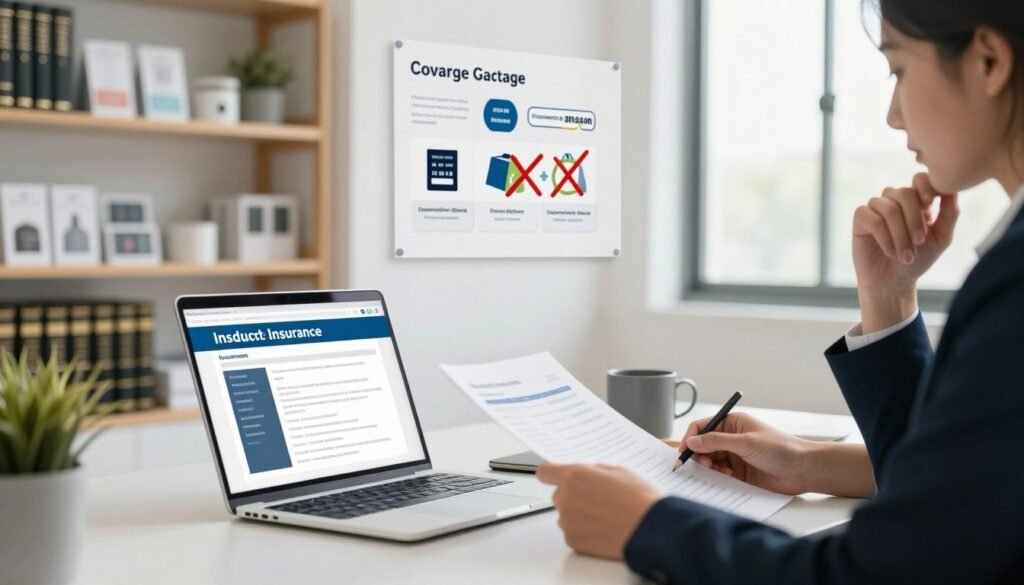
Running an online retail business means juggling sales, shipping, and compliance. Many platforms do not fully protect sellers from third‑party claims or operational gaps.
Amazon asks qualifying sellers to maintain at least $1 million in coverage. That rule highlights how exposed small retailers can be to bodily injury, property damage, and financial losses when a claim arises.
Companies like Next Insurance, Inc., located at 975 California Ave, Palo Alto, CA 94304, and providers such as Founder Shield and Insureon offer tailored options. Insureon even lets users buy a policy online and download a certificate in three steps, which helps fast‑moving sellers get proof of coverage.
Understanding the types of policies and common gaps helps protect your business and customers. This guide will explain who is covered, what claims are most common, and how to close protection gaps for smoother operations and fewer surprises.
Understanding the Risks of Modern E-Commerce
Online sellers face a mix of digital and physical threats that can hit revenue and reputation fast. Small mistakes in shipping, a data breach, or a defective item can lead to costly claims and lost customers. Identifying common exposures helps owners plan strong protection and smoother operations.
Common Liability Exposures
Hackers target businesses because they hold sensitive customer data. A breach can force notifications, fines, and remediation costs. At the same time, third‑party bodily injury or property damage from a sale or delivery still creates legal exposure for sellers.
- Data breaches and theft of payment or identity information.
- Third‑party injury or property damage tied to shipped orders.
- Recall costs and legal fees when a product causes harm.
The Impact of Defective Products
If a product causes harm or injury, the business can face lawsuits and steep medical or repair bills. That expense can sink small retailers and interrupt daily operations. Robust coverage and clear risk controls reduce the chance that one incident destroys a business’s future.
Why Amazon and Shopify Policies Leave You Exposed
Relying on marketplace shields alone can expose a seller to legal and financial risk. Platforms often set minimum coverage rules, but those limits do not replace a seller’s own safeguards.
For example, Amazon requires qualifying sellers to carry at least $1 million in coverage. Etsy and eBay, by contrast, do not demand any proof of coverage and will not protect sellers if a customer files a claim for injury or damage.
Strict liability laws in many states mean you can be held responsible simply because you sold an item. That opens businesses to lawsuits even when they did not manufacture the goods.
- Platform rules may cover narrow scenarios but leave gaps for defense costs and settlements.
- Sellers must manage risks tied to customer injury, property damage, and data breaches.
- Securing dedicated product liability and general liability insurance gives stronger coverage and financial protection.
| Marketplace | Requirement | Seller Risk |
|---|---|---|
| Amazon | $1M for qualifying sellers | Partial protection; gaps in legal defense and recall costs |
| Etsy / eBay | No mandatory coverage | Sellers exposed to third-party claims and settlements |
| Seller-Owned Coverage | Custom limits and endorsements | Better defense, claims handling, and broader coverage |
The Role of Product Liability Insurance Ecommerce Coverage
Selling goods online exposes firms to claims that can arrive long after a shipment leaves the warehouse. A single suit can drain cash and distract owners from running their shop.
Why You Need Dedicated Protection
Product liability coverage shields a business from legal fees and awards when a product harms a customer or damages property. This type of insurance helps cover defense costs and settlements that general policies may miss.
- Covers lawsuits alleging bodily injury or property damage tied to sold items.
- Protects businesses from catastrophic financial losses that could close a store.
- Addresses defects that appear despite reasonable safety checks and testing.
| What it covers | Why it matters | Who benefits |
|---|---|---|
| Legal defense and settlements | Prevents out-of-pocket bankruptcy risk | Small and mid-size online retailers |
| Recall and repair costs | Speeds recovery and protects reputation | Brands, resellers, and wholesalers |
Essential Insurance Policies for Online Retailers
Smart merchants build a coverage stack that matches how they sell and ship. That stack combines protections for everyday mishaps, employee injuries, and catastrophic judgments.
General Liability Basics
General liability covers claims for bodily injury and property damage that arise from operations or premises. It helps pay defense costs and settlements if a customer is hurt or an item damages a home.
This policy is foundational for any retail business that meets customers, stores inventory, or ships items regularly.
Workers Compensation Requirements
Most states require workers compensation when a company hires employees. It pays medical bills and partial wage replacement after work-related injuries.
Even small online shops with a warehouse or packers should confirm state rules and add this coverage early.
Umbrella Coverage
Umbrella coverage kicks in after limits on general liability or employer’s policies are exhausted. It adds an extra layer of protection against large judgments or multiple claims.
High-volume sellers should consider an umbrella policy to protect business assets and future cash flow.
| Policy | Primary Benefit | When to Buy |
|---|---|---|
| General liability | Defense and settlements for injury or property damage | Before opening or listing items for sale |
| Workers compensation | Medical and wage support for injured employees | When you employ staff, even part-time |
| Umbrella | Extra limits beyond core policies | After reaching high sales or carrying expensive inventory |
| Commercial property | Coverage for stolen or damaged inventory and equipment | If you store goods or run a fulfillment space |
Protecting Your Business Against Cyber Threats
Modern sellers must treat cyber risk as a core operational threat, not an IT afterthought.
Cyber coverage helps online retailers respond when phishing, ransomware, or breaches hit. Founder Shield and similar brokers note that digital claims can trigger third‑party suits tied to lost customer records.
- Cyber insurance shields businesses from lawsuits over electronic attacks, including phishing and ransomware.
- Attacks rose sharply after the pandemic, forcing firms to improve data controls and due diligence.
- First‑party coverage pays for customer notifications, credit monitoring, recovery, and extortion costs.
- Third‑party coverage funds defense when a client claims you failed to secure their systems.
| Type | What it pays | Why it matters |
|---|---|---|
| First‑party | Notifications, recovery, monitoring | Minimizes breach costs and downtime |
| Third‑party | Legal defense, settlements | Protects reputation and cash flow |
| Combined | Broader coverage and faster response | Gives small business owners more certainty |
Managing Property and Transit Risks
When goods move off-site, new exposure follows — and standard storefront rules may not apply.
Transit and transportation coverage protects a company from losses when packages are lost, stolen, or damaged in shipment. Carriers can face accidents, weather, and theft, so sellers need clear remedies.
Commercial property policies reimburse businesses for direct losses from fire, burglary, or vandalism. That support helps a retailer recover quickly and keep operations going.
- Inland marine covers laptops, inventory, and samples while stored off-site or on the move.
- Equipment breakdown pays to repair servers, POS, or essential tech after electrical or mechanical failure.
- Combine transit, property, and equipment provisions to limit gaps and speed recovery.
| Coverage | What it protects | When it helps |
|---|---|---|
| Transit & Transportation | Goods lost or damaged in shipping | Carrier accidents, weather, theft |
| Commercial Property | Storefronts, warehouses, inventory | Fire, burglary, vandalism |
| Inland Marine & Equipment | Mobile equipment, tech, off-site stock | Transit loss and mechanical failure |
Navigating Legal Requirements and Compliance
Staying compliant with federal and state rules is a key duty for any online retailer in the U.S.
Rules cover privacy, tax collection, and financial reporting. Breaking these rules can trigger fines, audits, or lawsuits.
Keeping processes current reduces exposure and builds customer trust. Simple steps include regular privacy reviews and clear return policies.
Professional coverage can soften the blow when compliance failures lead to claims. It often pays for defense and settlements tied to regulatory suits.
- Follow data privacy standards to avoid notification and penalty costs.
- Document financial controls to limit audit risk and fines.
- Use formal contracts with vendors and carriers to clarify who bears risk.
| Requirement | Risk if Ignored | How coverage helps |
|---|---|---|
| Data privacy (state & federal) | Fines, notification costs, reputation harm | Legal defense and breach response funds |
| Tax collection & reporting | Back taxes, penalties, interest | Assistance with defense and audit costs |
| Product safety & returns | Claims, recalls, courtroom costs | Coverage for settlement and defense |
How to Secure the Right Insurance for Your Store
Choosing the right coverage starts with clear facts about how your store operates.
Gather basic details: annual revenue, number of employees, sales channels, and inventory locations. These figures let brokers match limits and endorsements to real risks like injury, property damage, transit loss, or data exposure.
Use fast quoting tools to compare options. Founder Shield offers a streamlined quoting process for a quick, personalized estimate. Insureon asks for simple facts and can issue a policy certificate in three steps to meet marketplace rules.
Always read policy documents. Confirm exclusions, deductibles, and whether general liability and product coverage align with your operations.
- Compare quotes from trusted firms to balance cost and protection.
- Check endorsements for transit, cyber, and workers risks when relevant.
- Update coverage after major sales growth, new hires, or inventory changes.
| Provider | What They Ask | Quick Benefit |
|---|---|---|
| Founder Shield | Business model and revenue | Fast, personalized quote |
| Insureon | Revenue and employee count | Buy online; get COI in three steps |
| Local Broker | Operations, transit, and property details | Tailored endorsements and claims support |
Conclusion
Closing your risk plan with clear, regular reviews keeps surprises from derailing growth. Take a proactive approach to identifying hazards and match limits to real-world operations.
Understand platform gaps so you can shield your company from unexpected claims and costs. Test your coverage, update limits after growth, and confirm who pays during transit or a data incident.
Assess what your business needs and buy protection that fits those risks. Regular audits and timely updates reduce compliance gaps and help you meet marketplace rules like Amazon’s.
Investing in the right insurance now gives stability, faster recovery after a loss, and the confidence to scale your online store.