
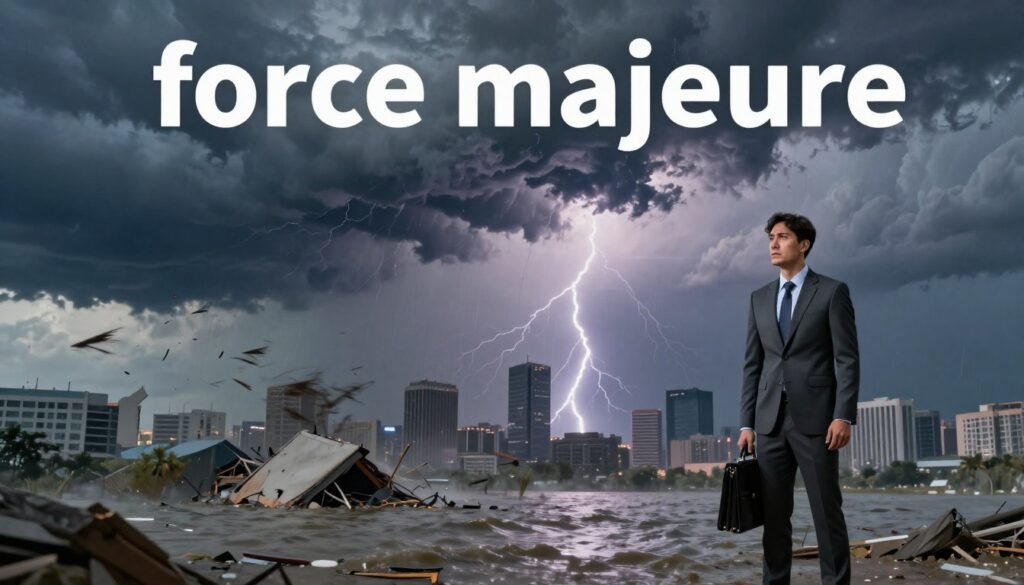
Understanding force majeure is essential for freelancers and contractors working in the United States today. This legal concept, rooted in French law, can excuse parties when an unforeseeable event makes performance impossible. But the term is often misunderstood when contracts and policies intersect.
Independent professionals should not assume automatic protection. Many policies exclude certain disasters or limit responses when a contract cites a force majeure clause. In 2024, knowing the legal test—an event that is truly unforeseeable and beyond control—can protect your finances.
Before signing a contract or renewing a plan, review the clause language carefully. Ask how an event is defined, whether delays or interruptions qualify, and what steps trigger relief. Clear terms help you avoid surprises and plan for real-world risks.
Understanding Force Majeure in Professional Contracts
Contracts for independent professionals often include provisions that excuse performance when extraordinary events occur. These clauses define when a party can pause or end duties without liability.
Legal definitions and scope
Legal definitions usually list acts of God, like earthquakes, floods, or hurricanes, as examples. Courts look for language that clearly ties the clause to specific incidents.
Unforeseeable events beyond control
A party must show the event made performance impossible or severely impaired. The landmark British case Henry v. Krell allowed relief when a coronation was cancelled and the purpose of the contract failed.
| Example | Typical trigger | Likely court view |
|---|---|---|
| Henry v. Krell | Event cancellation due to royal ill health | Relief granted where purpose was frustrated |
| Natural disaster | Earthquake, flood, hurricane | Relief if performance is physically impossible |
| Government action | Lockdown or trade restriction | May trigger clause if unforeseeable and external |
- Commercial contracts and leases commonly include a specific clause to protect parties from acts beyond control.
- Courts require external causation and no contribution by the claiming party.
- To invoke relief, show the incident was unforeseeable and it impaired contractual obligations.
The Role of Force Majeure Insurance Coverage
When a sudden catastrophe halts work, a properly worded policy can mean the difference between recovery and loss.
Many property owners and small companies assume a standard plan will respond to natural disasters. That is not always true. Comprehensive plans may indemnify for damage and listed losses, but the contract’s language decides payouts.
Business interruption protection is especially important. It can replace income when operations pause after a major event. Yet not every plan lists the same triggers.
- The Sanadak portal, launched March 5, 2024, helps policyholders resolve disputes with an insurance company.
- Verify whether your policy explicitly names the events that trigger a payout.
- Confirm whether business interruption is included and how loss amounts are calculated.
Review clauses carefully and ask your broker for written confirmation. Clear terms reduce surprise denials and speed recovery for companies facing a destructive incident.
Key Conditions for Invoking Contractual Relief
Clear legal tests guide whether a party can stop performing under a contract after an extraordinary incident. Courts look beyond labels and focus on three core conditions.
Impossibility of Predicting the Incident
The event must have been truly unforeseeable when the contract was made. If a risk was known or widely discussed, courts are unlikely to grant relief.
Impossibility of Preventing the Incident
Relief is barred if the claiming party could have taken reasonable steps to avoid or reduce harm. Simple precautions or routine planning can defeat a claim.
The Requirement of External Causation
The cause must be external and not traceable to the party’s own acts or omissions. Courts require that the incident be the sole reason performance failed.
- UAE Civil Law (Art. 287) exempts liability for loss from extraneous events like natural disasters.
- If a government order halts work, the party must still prove the event alone prevented performance.
- Negligence or contribution by the claiming party will block relief under most clauses.
Common Misconceptions Regarding Insurance Claims
Many freelancers assume a declared force majeure event means an automatic payout, but that belief often misleads claimants.
Most standard policies list exclusions or narrow triggers. Simply invoking a force majeure clause does not guarantee compensation. The insurance company will test claims against policy language, limits, and stated exclusions.
Clients often struggle with dense contract wording. Harris Balcombe helps interpret complex documents and negotiate with insurers. Their loss assessors translate legal terms into practical next steps and push for fair outcomes.
- Not every event named in a contract triggers a payout; exclusions matter.
- Business interruption claims require proof of financial loss tied to a covered peril.
- Insurers may define natural disasters narrowly, excluding some types of damage.
- Professional help speeds claims and reduces missed deadlines.
| Common Myth | Reality | Practical Action |
|---|---|---|
| All force majeure events are covered | Policies often exclude specific perils or limit payouts | Review clauses and exclusions before filing |
| Invoking a clause ensures payment | Payouts depend on policy terms and proof | Gather documented losses and timelines |
| Business interruption pays for any halt | It pays only if the policy lists the triggering event | Confirm trigger definitions and loss calculations |
Evaluating Your Policy for Specific Exclusions
Careful review of policy language helps independent professionals spot clauses that limit relief after an extraordinary event. Read definitions, territorial limits, and listed perils before you need to file a claim.
Identifying Geographical and Peril Limitations
Some standard forms exclude accidents linked to natural disasters. For example, Clause 9 of Chapter Four in the Standard Motor Vehicles Insurance Policies expressly denies compensation for flood-related incidents.
The Insurance Authority Board Resolution No. 25 of 2016 sets the baseline exclusions for many motor policies in the UAE, which professionals should compare to U.S. contracts when working cross-border.
- Check territorial language—claims may fail if the event happened outside the covered area.
- Watch for gradual damage clauses that exclude slow water intrusion or long-term deterioration.
- Confirm whether acts of war, intentional acts, or listed perils negate business interruption benefits.
| Exclusion type | Typical wording | Practical effect |
|---|---|---|
| Geographical | “territory limits” | Denies claims outside the covered region |
| Peril-specific | “excluding floods, earthquakes” | Removes payout for named disasters |
| Gradual damage | “wear and tear; long-term seepage” | No indemnity for slow property damage |
Map exclusions to your contract duties and document losses promptly. If a force majeure clause or policy term appears ambiguous, seek written clarification from the company or legal counsel before accepting denials.
Navigating Business Interruption and Civil Authority
Government orders can shut doors overnight, and that shift often decides whether lost income is compensable.
Civil authority clauses respond when a public body bars access to a property. Some policies pay for business loss tied to that order. Others require direct physical damage before any payout.
The Cajun Conti LLC v. Certain Underwriters at Lloyd’s case tested whether pandemic restrictions counted as physical loss. Courts and companies still differ on that point. Expect close factual and legal scrutiny.
- Document the government order, dates, and how it stopped operations.
- Note any required proof of physical damage in your contract or policy language.
- Keep clear records of lost revenue, supplier impacts, and mitigation actions.
| Trigger | Proof often required | Likely outcome |
|---|---|---|
| Government access ban | Order text; business loss ledger | Possible payout if clause applies |
| Property physical damage | Repair reports; photos | Higher chance of payment for interruption |
| Public-health mandates | Legal interpretation; precedent | Disputed; depends on court and policy terms |
Proactive Risk Management Strategies for Professionals
Professionals who map fallback options recover faster after sudden operational shocks. Start with a clear risk plan that lists critical systems, data backups, and alternate suppliers.
Keep contracts and your policy documents current. Review limits, trigger terms, and claims steps at least once a year.
Engage specialist loss assessors to spot gaps before an unexpected event happens. Their reviews help you prepare claims evidence and negotiate with an insurance company if needed.
- Maintain a disaster recovery plan with backup systems and temporary locations to keep operations running.
- Diversify suppliers and routes to reduce single-point failures in the supply chain.
- Update policies and contracts to reflect growing risks and business interruption needs.
| Action | Why it matters | Simple step |
|---|---|---|
| Backups | Protects data and client work | Daily cloud sync |
| Alternate suppliers | Limits downtime | Two vetted vendors per service |
| Expert review | Reveals gaps in protection | Annual loss assessor audit |
Conclusion
When urgent disruption hits, prompt documentation and correct contract reading make the difference. Start by listing dates, orders, and direct financial impacts so you can show exact losses.
.
Review any force majeure clause closely and compare it to your policies. Note trigger language and required proof so filings are accurate and timely.
Keep a short risk plan for your business. Update contracts, document mitigation steps, and save communications that show efforts to reduce harm.
If a dispute arises, legal precedent and a court’s interpretation may guide outcomes. Seek expert help early to improve your odds of a successful claim.